
The coast off Rayol Canadel Sur Mer in January
The Gulf of Saint Tropez is one destination that has stood the test of time. The alluring landscape, turquoise sea, stunning beaches, picture perfect villages, its glamorous history and the unique ‘joie de vivre’ this part of the world is famous for has lost nothing of its pulling power …. so at times it can get busy!
There are plenty of sunny days with blue skies all year round so if you prefer to avoid the busier months, the off-season is a great time to visit …. Below we’ve listed 20 reasons to come to our ‘little corner of Paradise’ during the winter months. After all, the French Riviera started out as a winter destination more than 160 years ago…

The History {Skip History}
If you’re new to the area it’s good to know a little about its’ colourful past; a more in-depth understanding of this destination can also help you to prepare for your trip. We’ve done the research so you don’t have to. Here are some highlights…
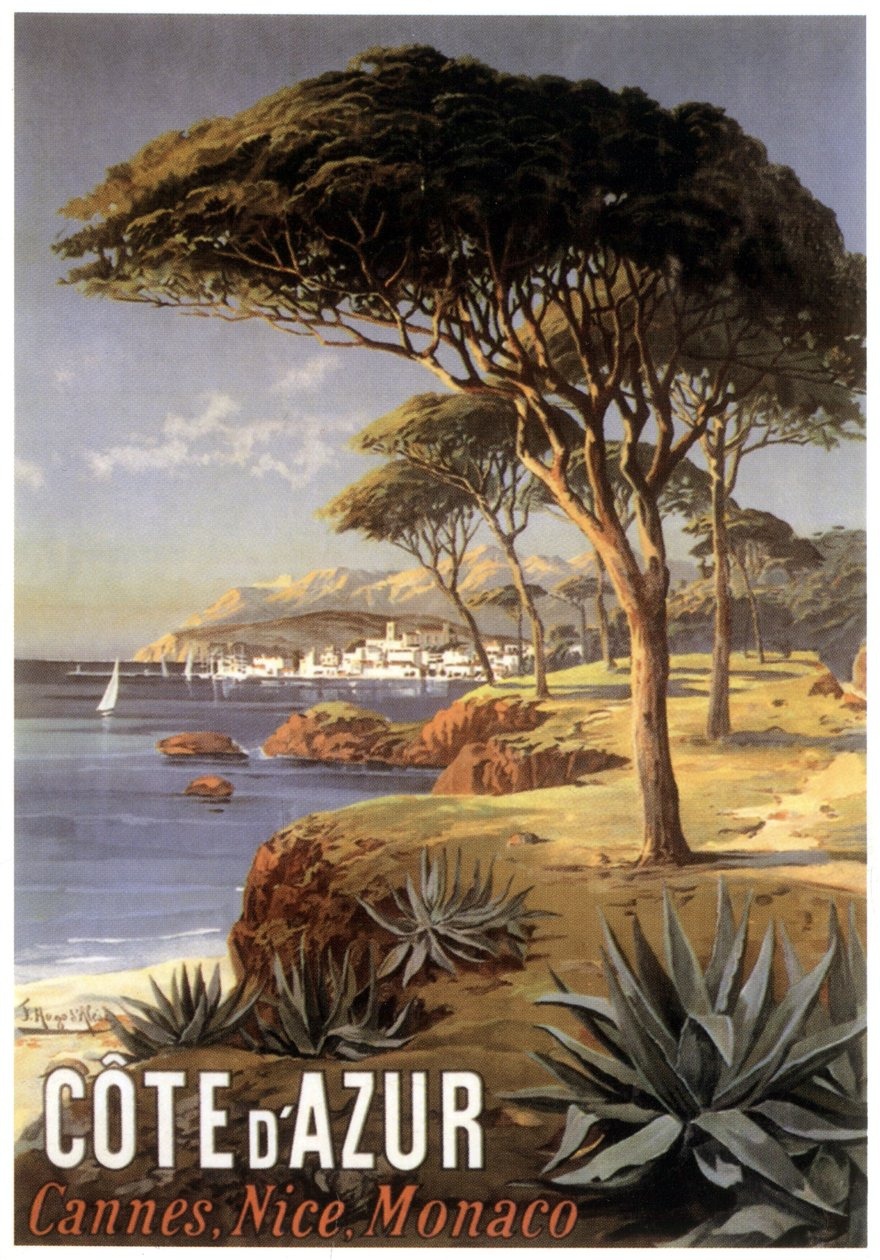
1890s advertisement for the Côte d'Azur
How the Victorians first ‘invaded’ the South of France
When the Victorians first ‘discovered’ this part of the world, they didn’t come in the summer. They actually flocked here during the winter months. It all started with Dr James Henry Bennett’s book ‘Winter and Spring on the shores of the Mediterranean’. Dr James bought a beautiful villa with a stunning garden in Menton after spending his convalescence recovering from tuberculosis.
First published in 1861, it quickly became a best seller in England and Germany. Hundreds of people suffering from TB and other diseases began to make their way to the Riviera. In 1870 an edition of the book was also published in New York and from then on increasing numbers of Americans subsequently found their way
here from then on. Queen Victoria and her son Prince Leopold visited for the first time in the Spring of 1882 in an attempt to improve their health. It was the first of many stays, her favourite places being Nice, Menton, Grasse and Cannes. On her death bed in the winter of 1901, she is said to have uttered ‘Oh, if only I were at Nice, I should recover”. During her visits Queen Victoria enjoyed meeting many other European Royals (all of whom she was of course related to) as the French Rivera had quickly become a holiday destination and not just a centre for convalescence. It soon became a meeting place for Royalty and aristocrats, but also for the rich and famous. New hotels, villas, promenades and other facilities were quickly being built to accelerate this boom. ‘Wintering in the South’ had rapidly become fashionable. It was a winter playground for the ‘upper crust’ with January as its high point and coastal towns and villages were bustling with Hollywood actors, politicians, millionaires and Russian Grand Dukes.

1956 poster for ‘And God Created Woman’
The myth of the Gulf of Saint Tropez, how did it all come to be …?
A very different woman catapulted the Gulf of Saint Tropez to international superstardom in the mid 1950s. The release of Roger Vadim’s ‘And God Created Woman’ in 1956 turned Brigitte Bardot into a sex symbol, icon and an overnight success.
The movie’s sensuality and free-spiritedness, embodied by Bardot, not only shaped what Saint Tropez still stands for today but also linked Bardot to the town like John Wayne to the Wild West or Al Capone to Chicago, though Bardot still lives in her Villa La Madrague near Plage de Canebiers. This probably helped to cement the link. Bardot fell in love with Saint Tropez’s genuine, rustic charms; the mulberry trees, the Provencal farmhouses smothered in bougainvillea, the
fishermen returning daily with full nets and the incredible sunsets. This movie and Bardot’s love for the place undoubtedly launched Saint Tropez as the
ultimate playground for the rich and famous and changed the sleepy fishing village forever. The makeshift bamboo canteen on the legendary Pampelonne beach, where the film crew dined every day, became the famous Club 55 and is still owned by the same family today.
The success of the movie helped to turn this long stretch of coastline into one of the world’s most iconic beaches. Hotel Byblos, the brainchild of a Lebanese businessman and situated in the heart of Saint Tropez, quickly became the focal point for the ‘It’ crowd. Apparently obsessed with Bardot and hopeful that it would attract her to him, when the businessman found himself running out of money mid-construction the French tycoon Sylvain Floirat took it over, and the same family have run it ever since. The hotel achieved legendary status when Mick Jagger first proposed to Bianca there and later celebrated with a post-wedding bash that made international headlines. The formal reception took place in the historic Café des Arts on the Place des Lices, a traditional family business that has stayed true to the Tropezienne spirit dating back to 1891. A few doors down, Le Café is one of the oldest establishments in Saint Tropez and has been a hangout for artists, writers, actors and celebrities for over 100 years. Hotel La Ponche which started out as a humble sailor’s tavern in 1930 has evolved into one
of the most legendary Boutique Hotels with its fabulous location right next to the port. The Érmitage Hotel with its beautiful terrace and stunning views over Saint Tropez is another renowned spot that recently underwent a creative makeover with vintage furniture and fabulous art. Café Sénéquier with its eye-catching red salon also had modest beginnings as a bakery. It is still famous for its amazing baked goods. Hotel Sube started out as a humble coaching inn during the mid-19 th century with a Sailors Bar on the first floor and fabulous views over the port. The balcony is still the place to be today, especially when the sun shines during events such as the ’Les Voiles’ in October.
Paul Signac first put the Gulf of Saint Tropez on the map in the late 1800s
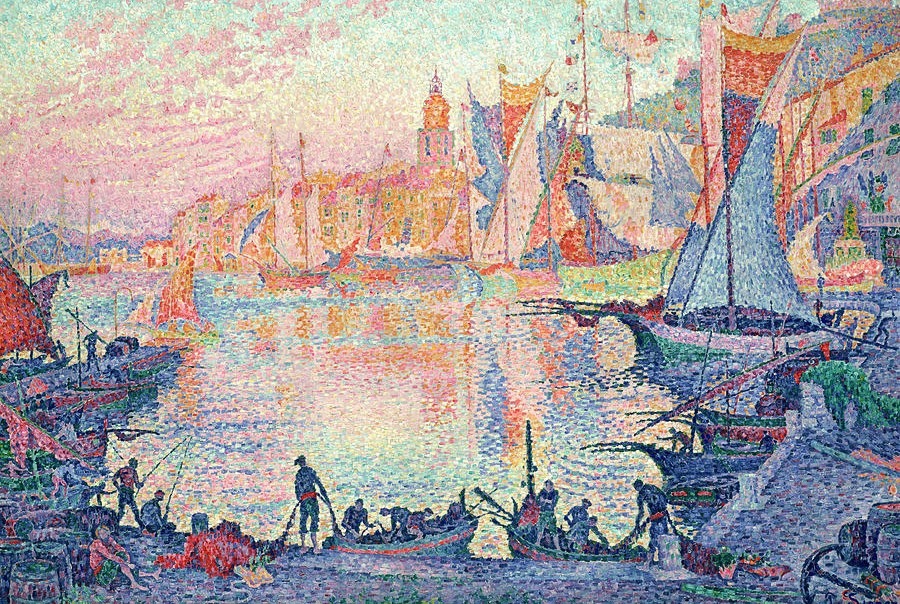
landscapes and the uniqueness of its light and colours. Amongst the many painters who fell under its spell, Paul Signac is probably the one who remains most closely associated with the town. In 1892 he set sail on his boat ‘Olympia’ and landed in Saint Tropez where he fell head over heels in love with the small port and its surroundings.
He bought Maison de La Hune which he inhabited on a part-time basis for more than 20 years. When he first arrived the Tropezians had never seen a painter before and lovingly nicknamed him ‘the photographer’. His house soon became a melting pot of Parisian artistic personalities such as Maximilien Luce, Henry Matisse, Albert Marquet, Félix Fénéon, Henri Manguin and many others, beginning a long pilgrimage of artists to Saint Tropez. Signac’s passion for colour and light and his desire to capture the essence of Saint Tropez led him to change his style and pave the way for a new vision of painting through pointillism, a pictorial technique that uses the position of small touches of colours rather than mixing colours on the pallet. He immortalised the colours of Saint-Tropez in major works including: La Bouée rouge, Port au soleil couchant, Saint-Tropez, Le port, Saint-Tropez Tartanes à quai, and Le phare. His new technique inspired other artists including Camille and Lucien Pissaro, Albert Dubois-Pillet, Henri Edmond-Cross, Théo Van Rysselberghe, Henri Matisse, Robert Delaunay and even Vincent Van Gogh.
For Charles Camoin too, Saint-Tropez became a source of inspiration after visiting his friend Signac in 1905. It became a unique setting for much of his work. André Dunoyer de Segonzac produced many works of still life there in which the heat, the sun and the exceptional light shine through. Here, he painted nudes that differ markedly from those painted before his move to Saint-Tropez, more curvaceous and sensual, in unison with nature. His works include ‘The nude with a red umbrella’, ‘Games on the beach of Bouillabaisse’ and ‘The beach’ In 1909, Pierre Bonnard first discovered Saint Tropez after being invited by Henri Manguin.
Although he only created a handful of paintings here his style of painting was altered for good and there is a clear ‘before and an after Saint-Tropez’ reflected in his style. It’s no exaggeration to say that by the beginning of the 20th century Saint Tropez had become one of the most active centres of the artistic Avant-garde. We’ll dedicate a separate article to how Saint Tropez influenced and transformed the painting style of many French painters.
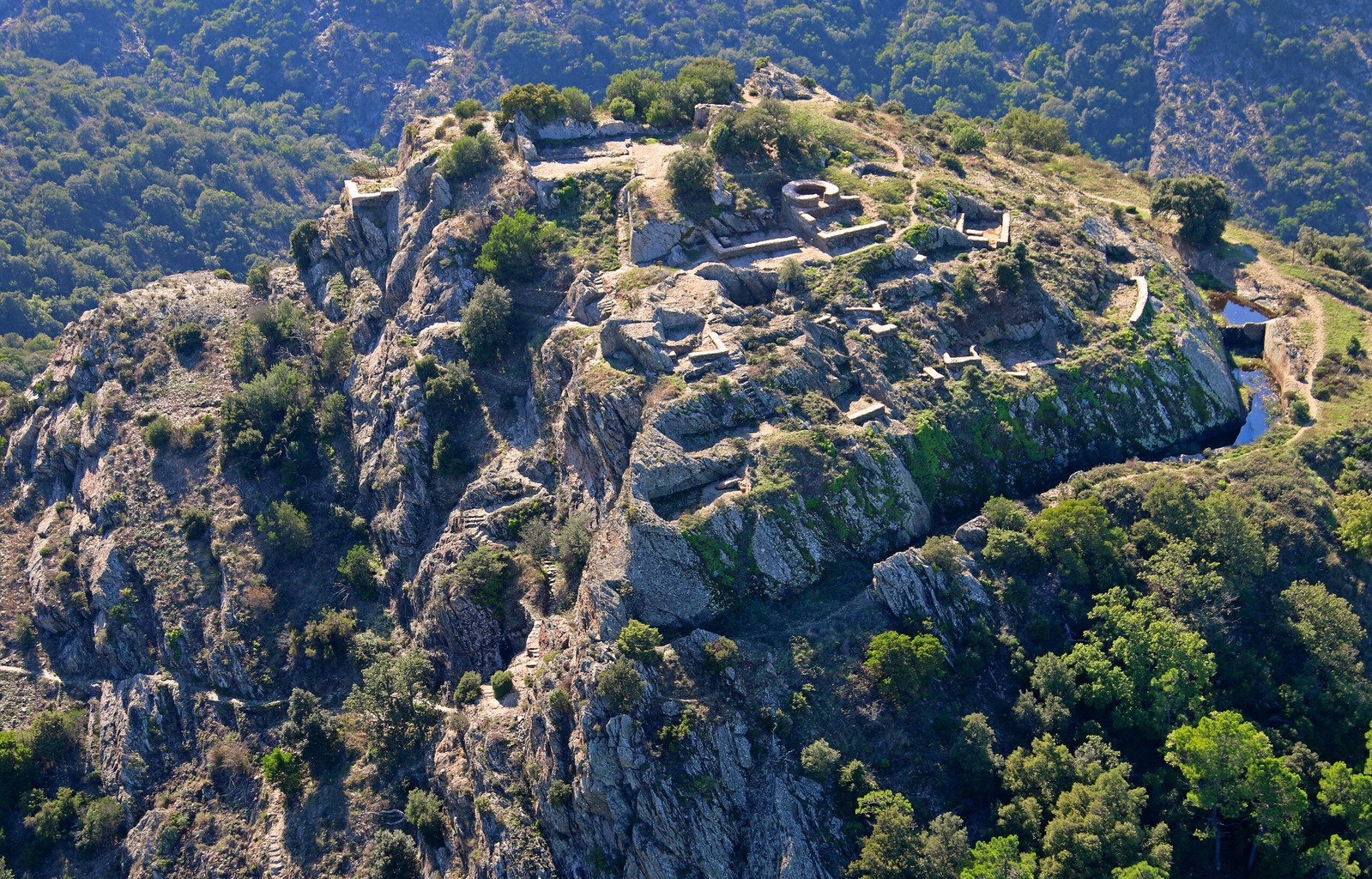
Le Fort-Freinet, La Garde Freinet
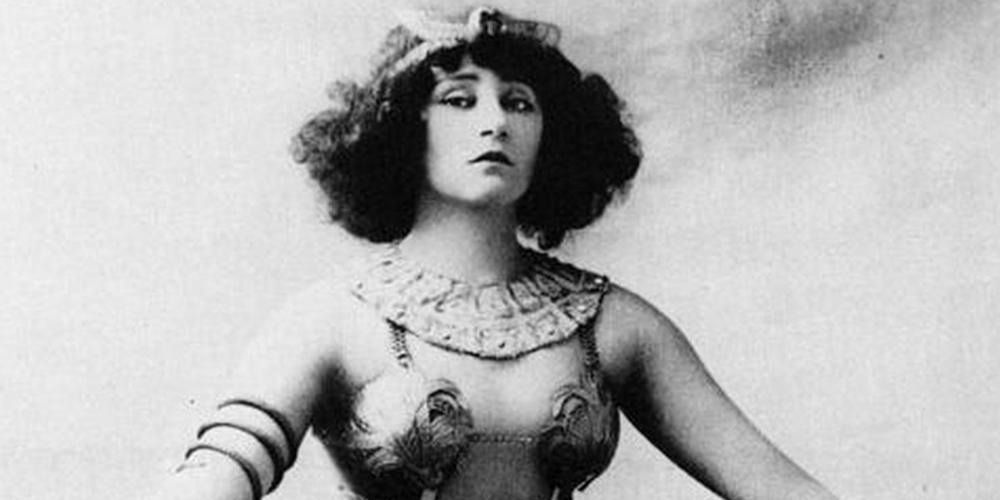
Sidonie-Gabrielle Colette
It was the Neo-Impressionists who first made Saint Tropez fashionable ...
In the 1920s & 30s Saint Tropez gradually began to gain a reputation as a glamourous getaway, no doubt fuelled by the works of painters such as Paul Signac but it was also writers such as Guy de Maupassant and Sidonie-Gabrielle Colette who were inspired by the beauty of their surroundings. The free-spirited Colette
purchased La Treille Muscate in 1925, a small Provencal house where she would write in part La Naissance du Jour, La Seconde, Prisons et Paradis and Duo. Fashion icons such as Coco Chanel also made their way to the formerly sleepy fishing village. Her revolutionary designs of comfort and
timeless elegance became the signature style for the Gulf of Saint Tropez. Chanel was credited for making tanning fashionable when she stepped off a yacht in 1923 in Cannes with an accidental suntan. It began to be associated with health, wealth and leisure.
The new trend coincided with shorter hemlines and a push against puritanical values. In the 1950s Bardot took this to another level when photos of her in tiny bikinis made headlines across the western world.
When the Parisian entrepreneur Léon Volterra settled in Saint Tropez and became Mayor in 1935, his connections with celebrities and the creative elite of the day drew a host of star visitors. Jean Cocteau, Françoise Sagan, Pablo Picasso and Juliette Gréco – to name a few – came to relax on the beaches, grace the bistros and walk the shaded streets rich with Mediterranean atmosphere. As the town developed an international reputation, the Hollywood elite also began to descend upon Saint Tropez. Errol Flynn, Greta Garbo, Rita Hayworth and Orson Welles were seen sipping cocktails in the now-fashionable bars and clubs. After World War 2 and the Allied Operation ‘Dragon’ which liberated the south of France from Nazi occupation, there was an influx of artists, primarily of the French New Wave in cinema. Many movies were filmed in the area with ‘And God Created Woman’ being the most famous. Others included Francoise Sagan’s ‘Bonjour Tristesse’ with David Niven, Jean Seberg and Deborah Kerr, ‘La Chamade’ with Michel Piccoli and Catherine
Deneuve as well as ‘La Piscine’ with Romy Schneider and Alain Delon, ‘Saint-Tropez Blues’,
‘Les Biches’ and of course ‘Le Gendarme de Saint Tropez’ with Louis de Funès.
In summary
it wasn’t until tanning and sea bathing became increasingly popular in the 1920s and 30s that the Cote d’Azur gradually became a summer destination. Today it seems everyone forgets that the French Rivera started out as Europe’s favourite winter hideout for the Victorian and Edwardian elite. With more than its fair share of sunlight & blue skies the Gulf of Saint Tropez is the perfect place for a winter holiday. Below we’ve listed some of our favourite things to do during the off-season.
20 of our favourite THINGS TO DO in
the Gulf of Saint Tropez in the off-season
Suitable for active people and most budget sensitive options
A word about geography
The Gulf of Saint-Tropez is made up of 12 communes located both on the coast and within the Maures Forest: Rayol-Canadel-sur-Mer, Cavalaire-sur-Mer, La Croix Valmer, Ramatuelle, Saint-Tropez, Gassin, La Mole, Cogolin, Grimaud, La Garde-Freinet, Le Plan de la Tour and Sainte-Maxime. Everything included below is located within or just outside these communes.
Map of the Gulf of Saint Tropez
1. Go cold-water swimming at Gigaro, Pampelonne or Port Cogolin
engage with nature. Cold water swimming is a great immune booster and is shown to improve cognitive health amongst numerous other benefits. What could be better than a winter swim in gorgeous sunshine with bright blue skies, surrounded by beautiful landscapes, not to mention the crystal-clear turquoise water and clean empty beaches? The water temperature is usually higher than other parts of Europe, averaging around 13 – 17 degrees Celsius which means you can stay in a little longer. You can also combine the swim with a brisk walk before and/or after.
Here are some beaches we love for cold water swimming
– Plage de Gigaro
– Plage de Brouis
– Plage de Silvabelle
– Plage du Gros Pin
– Plage de Salins
– Marine de Cogolin
– Plage de Pampelonne
It’s worth noting that to prevent erosion during the winter months, many beaches leave some sea-grass layered at the shoreline, but don’t let this deter you from swimming.
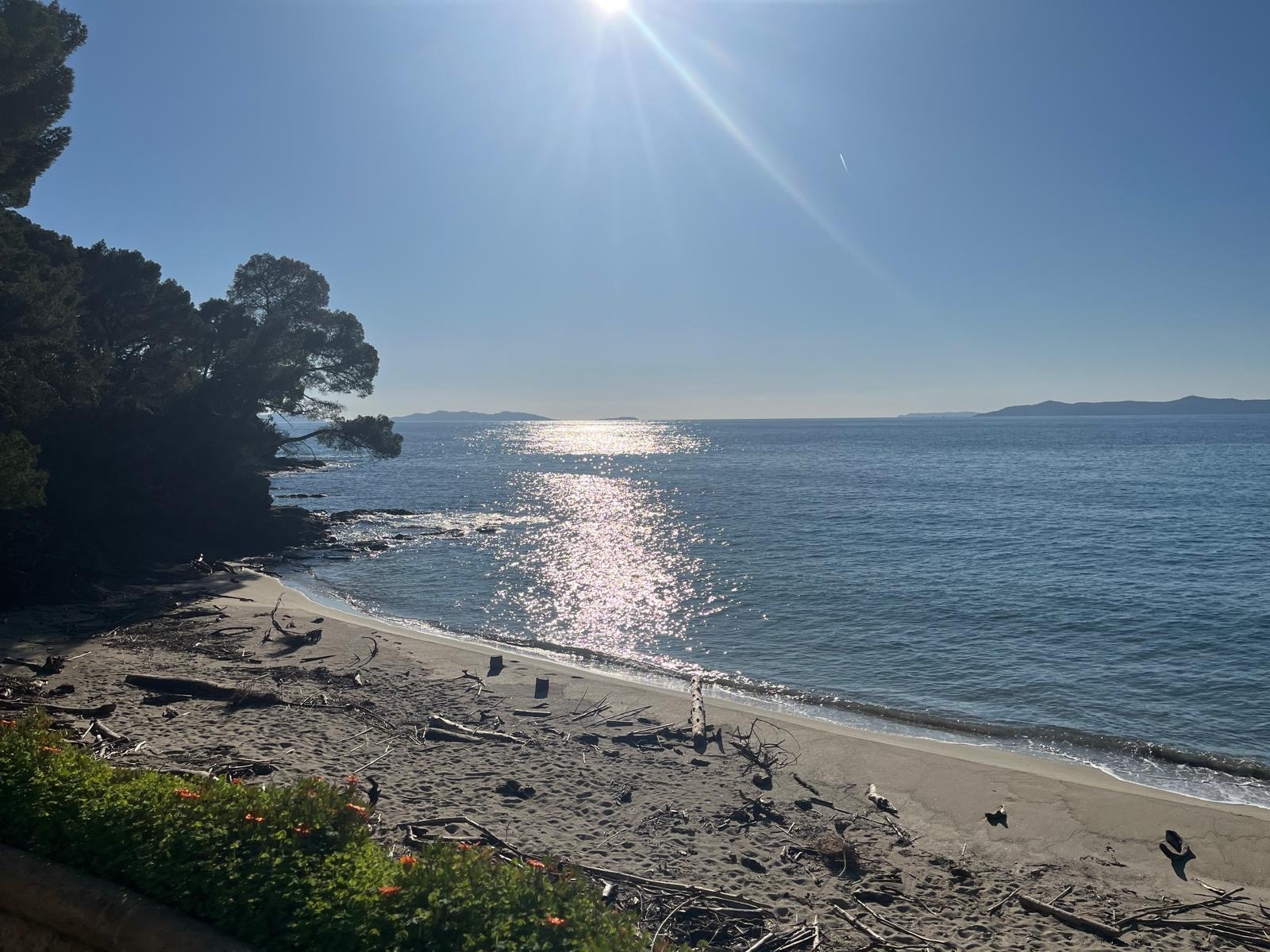
Beach at Domain Du Rayol, Rayol Canadel Sur Mer
2. Walk a section of the ‘Sentier du Littoral’ from Saint Tropez or Ramatuelle
There are an almost infinite number of beautiful walks in the Gulf of Saint Tropez so it’s really hard to pick favourites but one of our most loved is the Sentier du Littoral, the costal path that stretches all the way from Saint Tropez to Bormes Les Mimosa. It would take you probably more than one day to walk the entire stretch so we recommend doing it in sections!
Here are a few suggestions (we will do a separate detailed article on the entire path)
A. Saint Tropez Coastal Path Loop
Experience this 10.3-km loop trail near Saint-Tropez, Var. Generally considered a moderately challenging route, it takes about 2 hours to complete. This is a very popular area for fishing and hiking, so you'll likely encounter other people while exploring. Dogs are welcome, but must be on a leash. This hike starts from the Plage des Canoubiers and continues around the Cap de Saint-Tropez. The coastal path leads you from beaches to creeks, offering beautiful views of the Mediterranean. You’ll pass the Plage des Canoubiers, the Calanque de la Rabiou, the Plage de la Moutte, the Plage des Salins and the Plage de Capon with its battery.
B. Cap Camarat – Cap Taillat via Coastal Path and Farm Path
Explore this 18.8-km loop trail near Ramatuelle. Generally considered a difficult trail, it takes an average of 4 to 5 hours to complete. It’s accessible year-round, and is worth the experience in any season. Dogs are welcome and can be let off-leash in some areas. Hiking on the Saint-Tropez peninsula starting from the Cap Camarat lighthouse, you follow the coast along the Bay of Bon-Porté to Cap Taillat, then pass by wooded paths. There are magnificent views of the Mediterranean and at every corner, small bays invite you to swim.
C. Saint Tropez – Pampelonne walk
Experience this 13.7-km point-to-point trail near Saint-Tropez. Generally considered a moderately challenging route, it takes an average of 2 h 45 min to complete. The trail is open year-round and is beautiful to visit anytime. Dogs are welcome, but must be on a leash. This hike starts from the port of Saint-Tropez and runs along the coast of the peninsula to the sandy beach of Pampelonne. Along the way, you’ll pass at the foot of the citadel of Saint-Tropez, by the Calanque de la Rabiou, and past several small beaches. You can return to the starting point by bus or retrace your steps.
D. Cap Taillat via Ramatuelle
Check out this 10.6-km loop trail near Ramatuelle. Generally rated as a moderate trail, it takes an average of 3 hrs to complete. You can access it all year round and the experience is worth it in any season. The hike is along the Saint-Tropez peninsula, into the Port-Cros National Park, passing several beautiful sandy beaches, and the magnificent Cap Taillat. Beautiful views of the Mediterranean are the
backdrop to this entire trail.
E. Capon Battery – Plage de Salins
Discover this 7.1-km out-and-back trail near Ramatuelle. Generally considered an easy route, it takes an average of 1 h 30 min to complete. The trail is open year- round and is beautiful to visit anytime. This hike runs along the Mediterranean coastline between beaches and scrubland, from Cap du Pinet to Plage des Salins. Along the way, you’ll enjoy superb views of the sea and the small island of Tête de Chien. Halfway along the route, you’ll come across the Capon battery, a wild valley that bears witness to Saint-Tropez’s military history.
During the winter months there’s little in terms of catering along this stretch so it’s best to take a flask and snacks. One good snack place on Pampelonne beach open most of the year is Tono (point 15)
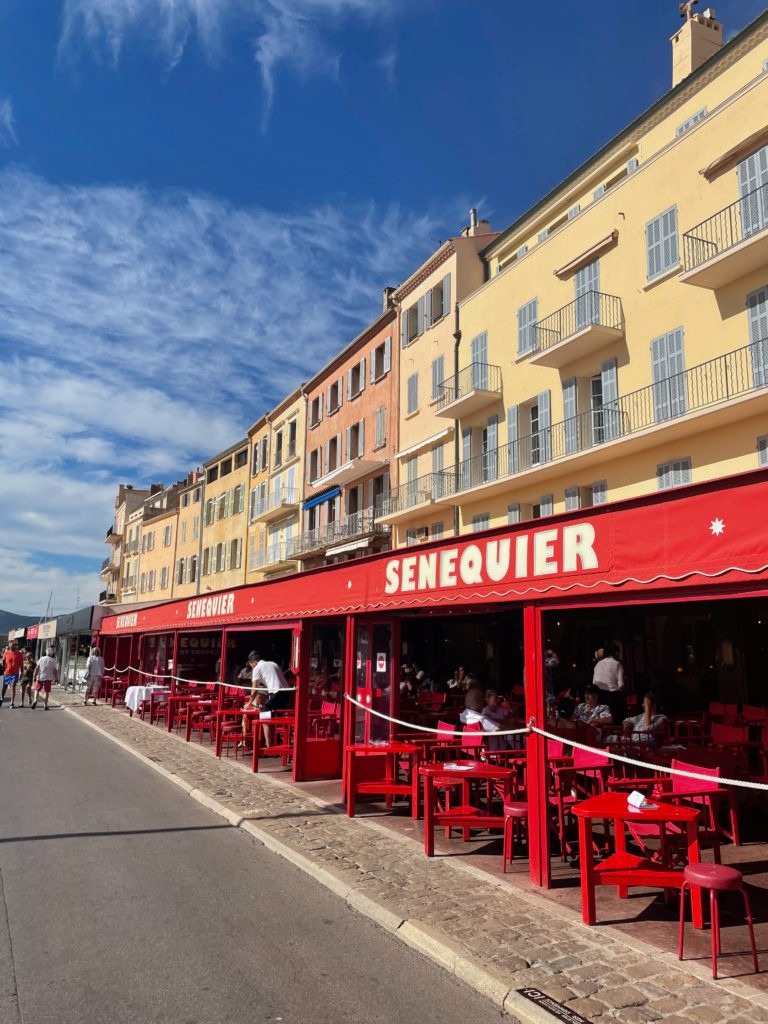
Senequier, Saint Tropez
3. Enjoy Chocolat Chaud & ‘people watching’ at Senequier, Saint Tropez
Café Senequier has, just like Saint Tropez, lasted the test of time. One of the original artist and celebrity hang-outs it proudly dates back to 1887 (when it started out as a patisserie) and its iconic red tables & chairs, the ‘Terrace Rouge’ have achieved worldwide fame.
We love the beautiful interior, the atmosphere (especially during the winter when it’s a bit more intimate) and their exquisite menu. Best of all is their amazing hot chocolate to warm up after a long walk along the Sentier du Littoral. It’s a bit more pricey than other places but worth every centime, and a delightful treat (the hot chocolate comes in a pot so you can share, just order two cups!). Here you’ll always find a diverse mix of locals and visitors from all over the world.
4. Visit Domaine du Rayol - Le Jardins des Méditerranées in Rayol Canadel sur Mer
We love this garden and hold an annual pass! It’s simply marvellous and worth the trip, every time. This is a place to slow down and forget about your worries at least for a while. Soak up the
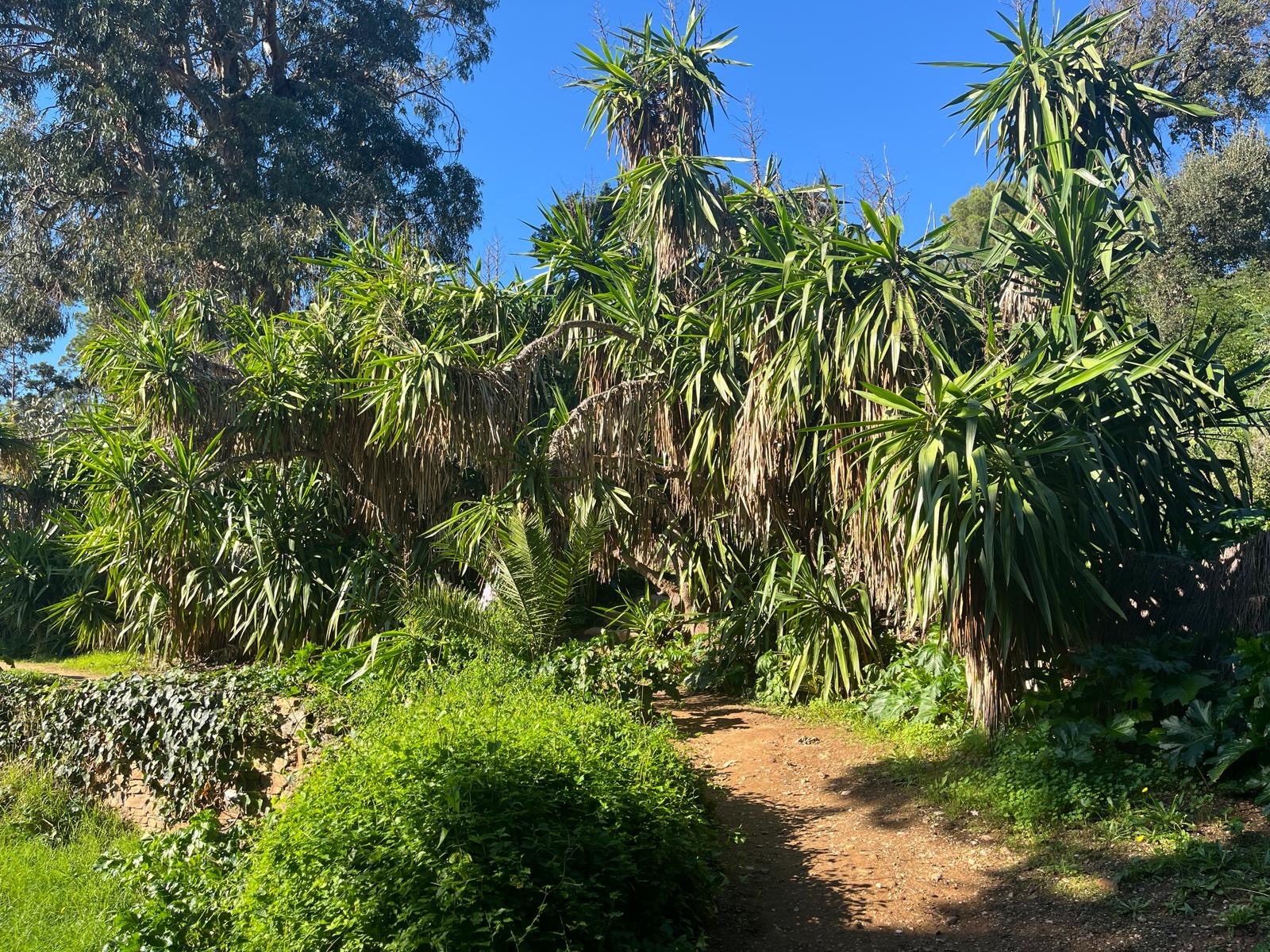
Le Jardin Des Méditerranéens, Rayol Canadel Sur Mer
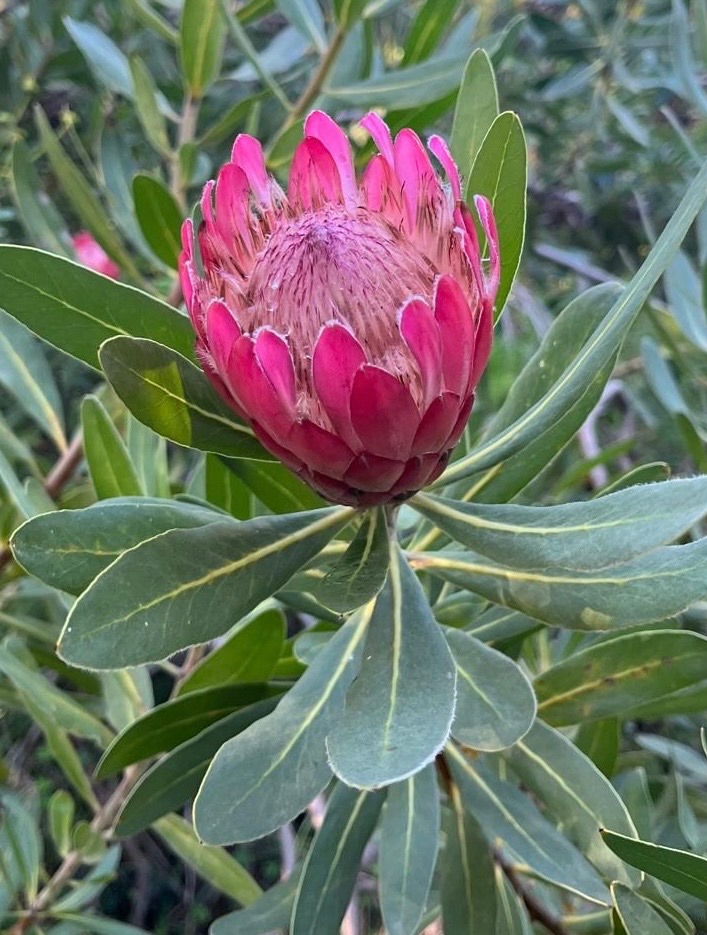
Le Jardin Des Méditerranéens, Rayol Canadel Sur Mer
tranquillity and beauty of this incredible garden which slopes down to the edge of the sea and is open year-round. The history is just as interesting as all the plants & trees and the beauty of the setting is unrivalled. It dates back to 1910 when Alfred Courmes, a Parisian businessman born in Bormes les Mimosa, bought around thirty hectares of complete wilderness on the Corniche des Maures.
Under the supervision of Architect Guillaume Tronchet, he erected numerous structures including a stunning main house which was later to become the ‘Hotel & Casino de la Mer’, a farm and a second house, the Villa Rayolet (both have been renovated recently). Courmes planted many exotic plants from countries with
climate zones to the Mediterranean. The second owner, Henri Potez, who moved to the south of France during World War II, further enhanced the garden. Now it’s in the loving hands of the Conservatoire du Littoral who have done an amazing job in protecting and maintaining one of France’s most wonderful gardens. It Is home to plants and trees from Chile, New Zealand, the Americas, the Canary Isles and South Africa, to name just a few. There’s also a wonderful alfresco restaurant and café that you can only access from inside the garden. It has a small exquisite daily menu consisting of the most amazing local produce.
5. Play Pétanque on Place des Lices, Saint Tropez
well-known La Baraque, an historic take-away eatery dating back to 1946, and soak in the atmosphere. During the winter months this traditional game is played mostly by skilful locals who take it very seriously. It is great fun though, even if you’re a beginner. [A set of used pétanque boules is usually easy to find in one the many local flea markets…]
6. Visit the Domaine de Saint Roux for wine-tasting, Le Cannet Des Maures
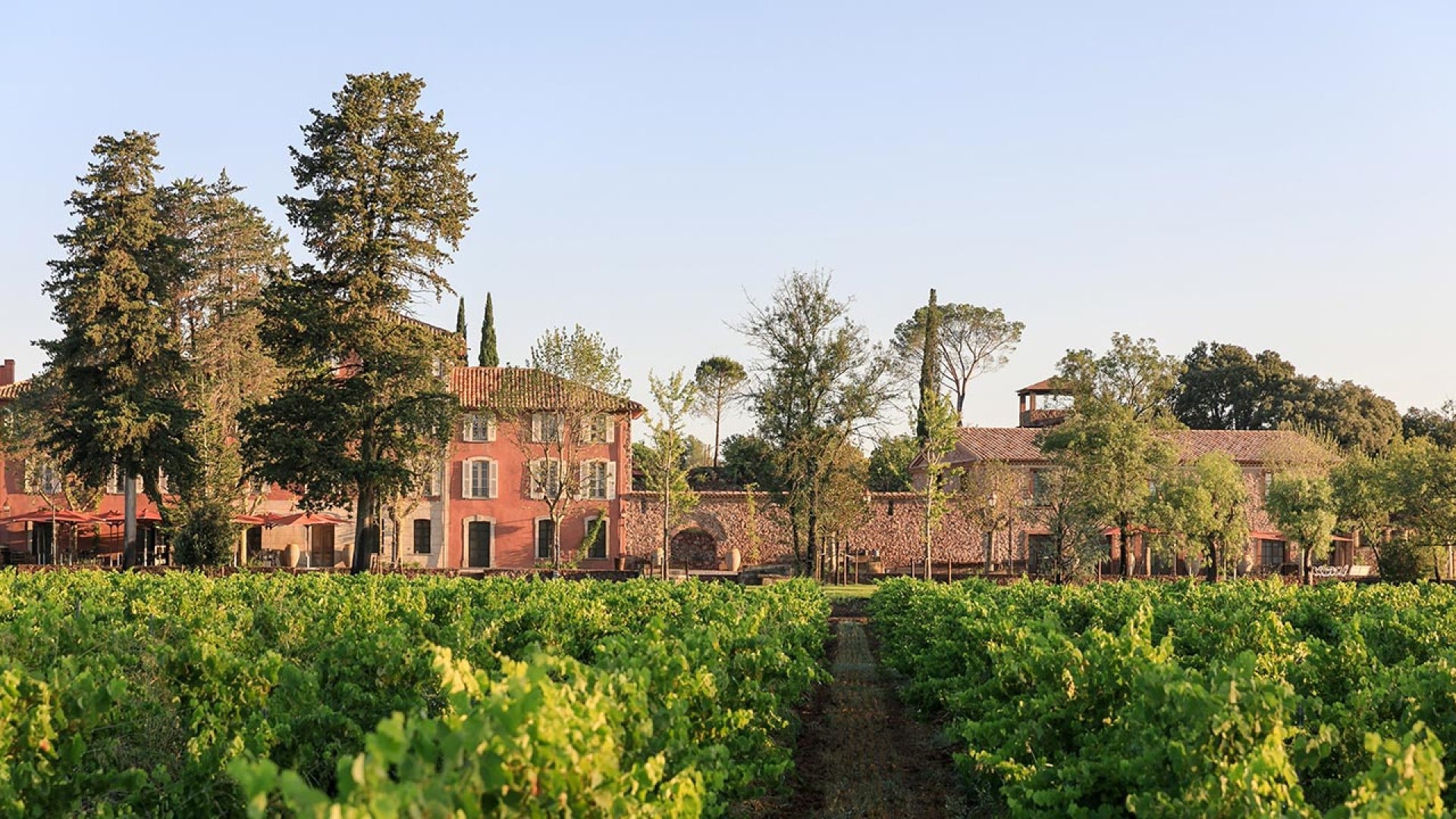
Chateau Saint Roux, Le Cannet Des Maures
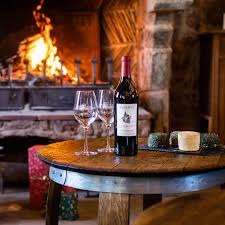
Chateau Saint Roux, Le Cannet Des Maures
One of our favourites sits just outside the commune of La Garde Freinet but we’ve included it here as we love it so much. The architecture, interior design and grounds of Chateau Saint Roux are beautiful. Just being there is a delight. The restaurant is open all year and serves delicious typical Provençal food, but you can also just do some wine tasting in front of the open fire. The Chateau has its own mini-farm with a fabulous organic vegetable garden and animal enclosure. They bake their own sourdough breads and make their own goat’s cheese… if you have the time you can sign up for one of their workshops.
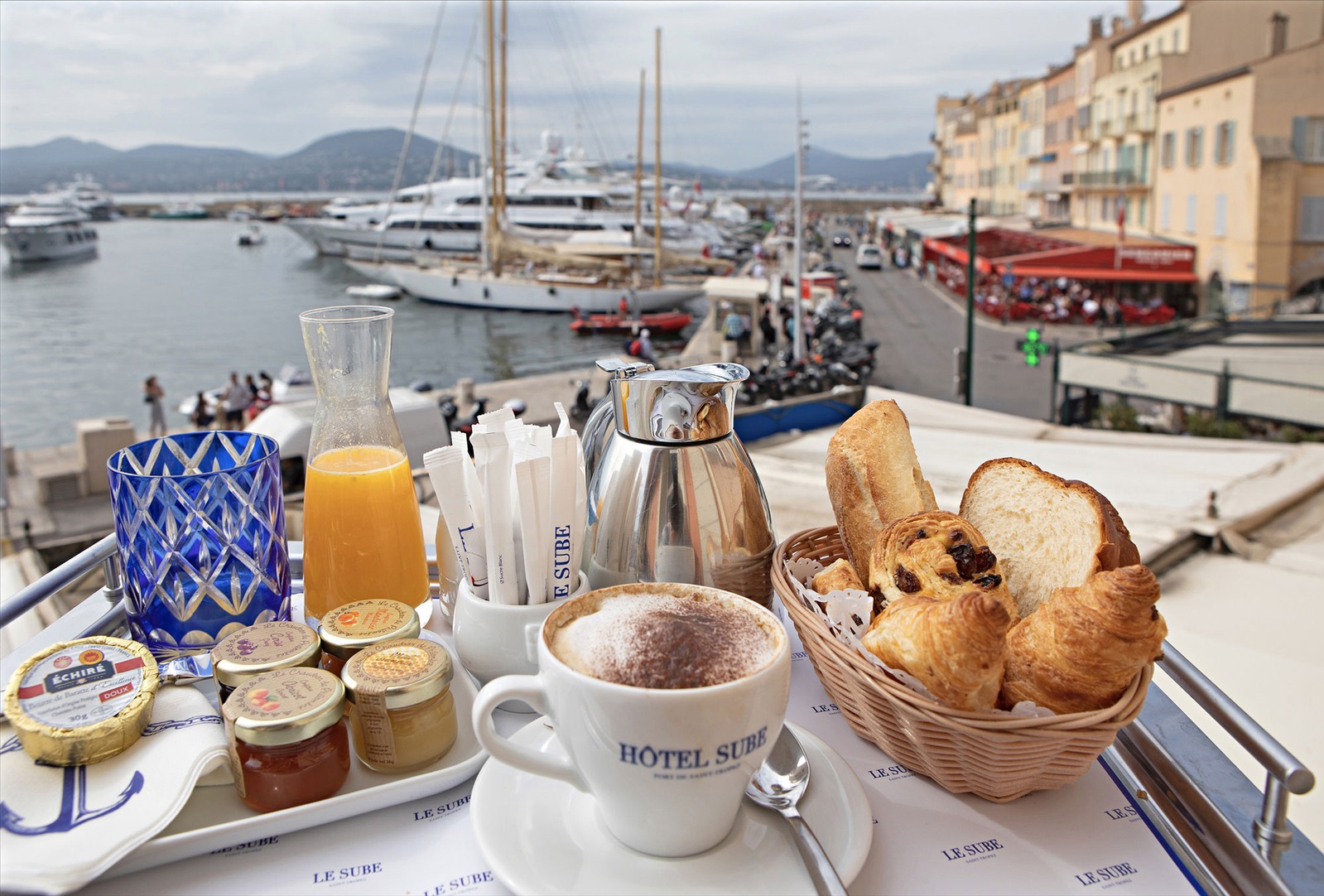
Hotel Bar Sube, Saint Tropez
7. Have breakfast at Hotel Bar Sube, Saint Tropez
Hotel Sube dates back to the mid-19th century when it was initially a coaching inn. Over the decades many writers and artists frequented the Sube: Paul Signac, Camoin, Manguin and the writers Colette and Apollinaire as well as Orson Welles. The Sailor’s bar on the first floor still has the maritime feel of bygone days. It leads out onto a small balcony from which
8. Go walking & birdwatching on the Plaine des Maures, just outside La Garde Freinet
and east by the northern ridges of the Massif des Maures. We were captivated by its beauty on our first excursion. Its biodiversity is unique in the Mediterranean region, consisting of Oak and Umbrella Pine trees, mossy glades, shrubland, ponds, streams, pink sandstone slabs and meadows bursting with wildflowers and rchids. The area is occupied all year round by various bird communities representing around 150 species. The reedbeds of the Escarcets and Aurèdes lakes are ideal nesting sites, while the heather of the maquis scrub, interspersed with fields of vines, provides an optimum habitat for the rare Hermann’s tortoise. The orchids, ferns, dry grassland, alder and poplar trees form a mosaic of spectacular environments. And as the sun sets, the pink sandstone slabs studded with umbrella pines and cork oak, are reminiscent of the African Savannah. This whole area has seen virtually no development, therefore some paths, although
relatively flat, can be hazardous especially after rain. Good shoes are essential. The routes can be explored on foot, by mountain bike or on horseback (unharnessed), with specific paths designated for each of these activities. It’s relatively easy to find your way around as numbered direction posts have been placed at main junctions. Whether on foot, horseback or bicycle, pay attention to the signage relevant to you, and stay on the marked paths.
Here are some of the main routes:
Les vallons des Escarcets : hike 6,2 km.
La dernière plaine sauvage : hike 13,1 km.
Les drailles des Escarcets : mountain bike ride 14,2 km.
La ronde des Escarcets : horse ride 17,8 km.
While visiting, please remember that you are in a nature reserve: Look but don’t touch. Don’t pick or remove any plants, and be careful not to disturb wildlife. Do not light fires or discard cigarette butts, even if extinguished. Take all rubbish home with you. Close all gates behind you. Keep dogs on a leash.
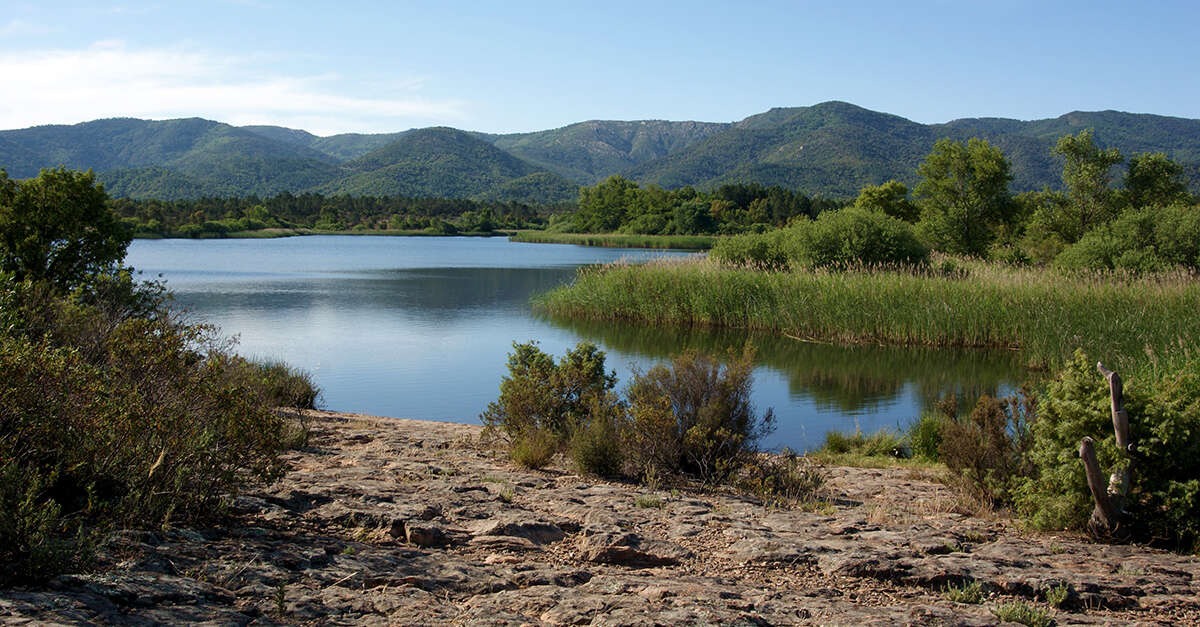
Lac Des Escarcets, Plaine Des Maures
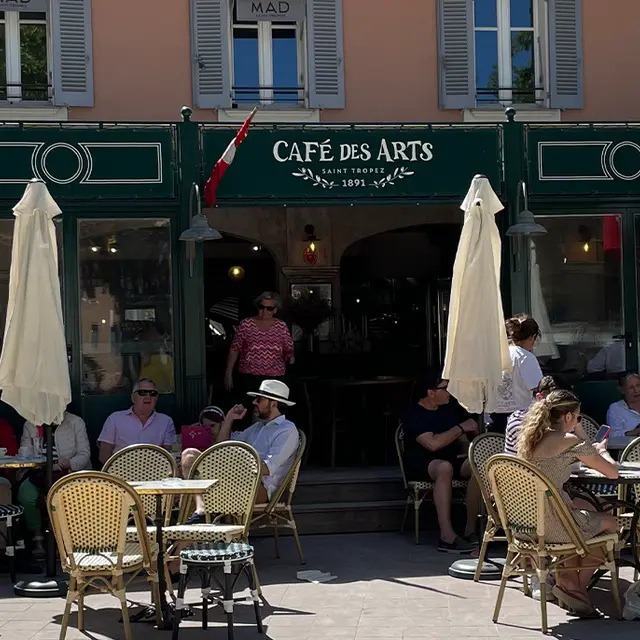
Café Des Arts, Saint Tropez
9. Ascend the steps to the Citadel and enjoy a coffee or lunch at Café des Arts, Saint Tropez
Lices have gone upmarket with brands from elsewhere, Café des Arts has retained its traditional charm, successfully preserving the Tropezian spirit. The old boules players such as Eddie Barclay, Henri Salvador, Eddie Constantine took their aperitif here after a game. The charm of a bygone era is evident everywhere; the dark green upholstered benches, master paintings, authentic bistro chairs and of course the old pewter bar. Still frequented by locals the cuisine is simple and traditional without any pretence. Try the stuffed vegetables, eggs mayonnaise, beef tartare with French fries, squid in parsley or fish in a salt crust. The terrace is a perfect place to watch what’s going on at Place des Lices and you can soak up the atmosphere which is especially interesting on market days (Tuesday and Saturday)
10. Take a drive around the Massif des Maures & eat Bouillabaisse at Rayol-Canadel Sur Mer
the surface. The Massif des Maures is one of the wildest and most typical landscapes of Provence. Covered with cork oaks and chestnut groves, ‘Les Maures’ offer a wide variety of walking, riding and horseback trails. Home to 26 villages in total, such as La Garde Freinet, many have historically
been involved in chestnut, cork and silk production. One thing we love doing is to drive from Cogolin towards La Mole, taking a left after the airport. The narrow steep road winds through the wilderness up to the Point de Vue du col du Rayol Canadel sur Mer. Park your car and enjoy the breathtaking views across the sea to the Île du Levant in the distance. Great place for a picnic. There are a number of lovely walking trail too.
Afterwards drive down to the beach at Le Rayol with its crystal black sand and dip your feet into the clear sparking water. Go for a walk and have lunch or dinner at the historic seafood restaurant Maurin des Maures. Founded in 1920, this wonderful place with its charismatic owners Dede & Andre del Monte (open all year round) has been a favourite with many celebrities over the decades. Besides their famous Bouillabaisse, they have a very affordable 3 course menu for around €40 and a lunch menu for €20+
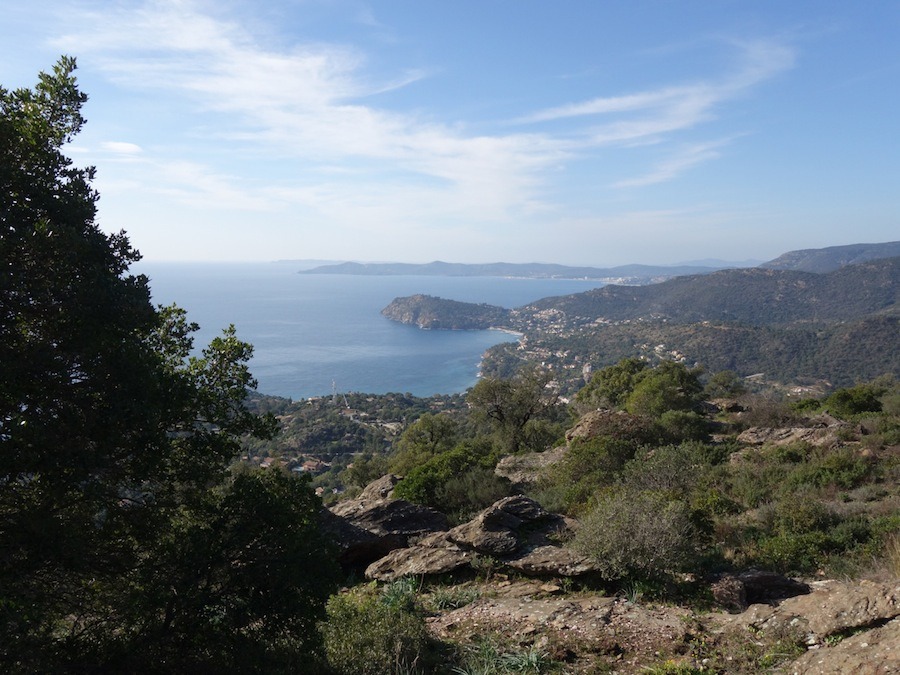
View from the Col du Rayol, Rayol Canadel Sur Mer
11. Visit the Musee de l’Annonciade, Saint Tropez
The Annonciade Museum, the ‘Museon Tropelen’ was first established in 1922. It’s a truly beautiful place and should not be missed. It showcases some of the greatest names in 20th century painting with particular focus on Pointillism, Nabi and Fauve movements. We’re regular visitors as
as we just love the exhibited art. Some paintings stay permanently whilst others change. The museum presents a nowadays little-known aspect of the history of Saint Tropez which we spoke about in one of the earlier chapters (click to access). The little fishing village was in fact a particularly active centre of the pictorial Avant-garde at the beginning of the 20th century thanks
to Paul Signac, who discovered the small fishing port in 1892, before it became a glamourous holiday destination. Housed in a former 16th century chapel from which it bears its name, the Musée de l’ Annonciade was extensively expanded and redesigned by the architect Louis Süe so that it could house parts of Georges Grammont’s private collection which he donated to the museum over the years. “My idea is to make the interior of this building a sort of welcoming and comfortable home for art lovers ” wrote Grammont at the time. Seduced by the beauty of the region, Signac bought La Hune, which he turned into a studio. Over the next 20 years he was to live there on a part time basis and throughout this period he invited many painters who were all inspired by the beauty of the landscapes, the colours of Provence and of course the magnificent light including Henri-Edmond Cross, Maximilien Luce, Théo van Rysselberghe, Henri Matisse, Albert Marquet, George Braque, Charles Camoin, Pierre Bonnard, Ker-Xavier Roussel, and Mauris Denis.
The town and its stunning surroundings changed French art forever. The collection includes exquisite paintings from the 1890s to the 1950s with most belonging to the Pointillist, Nabi and Fauve movements.
12. Browse at ‘Jas des Roberts’ Brocante, Cogolin
This flea market has been in the Gulf of Saint Tropez for more than 30 years ever since Audrey Charrasse’s father first took it over. The market takes place every Sunday morning and is set in a beautiful spot just outside Cogolin town.
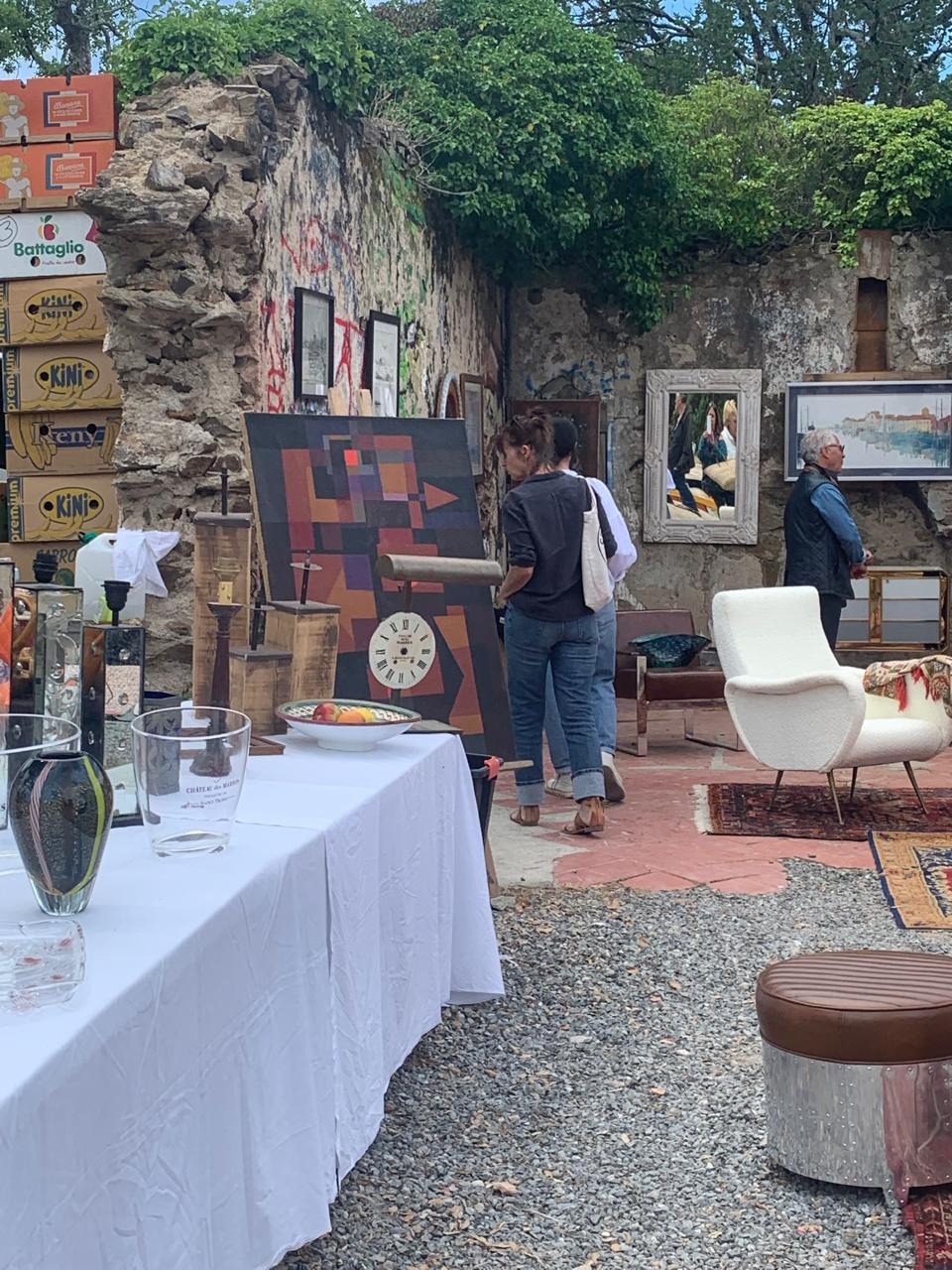
Brocante Jas Des Robert, Cogolin
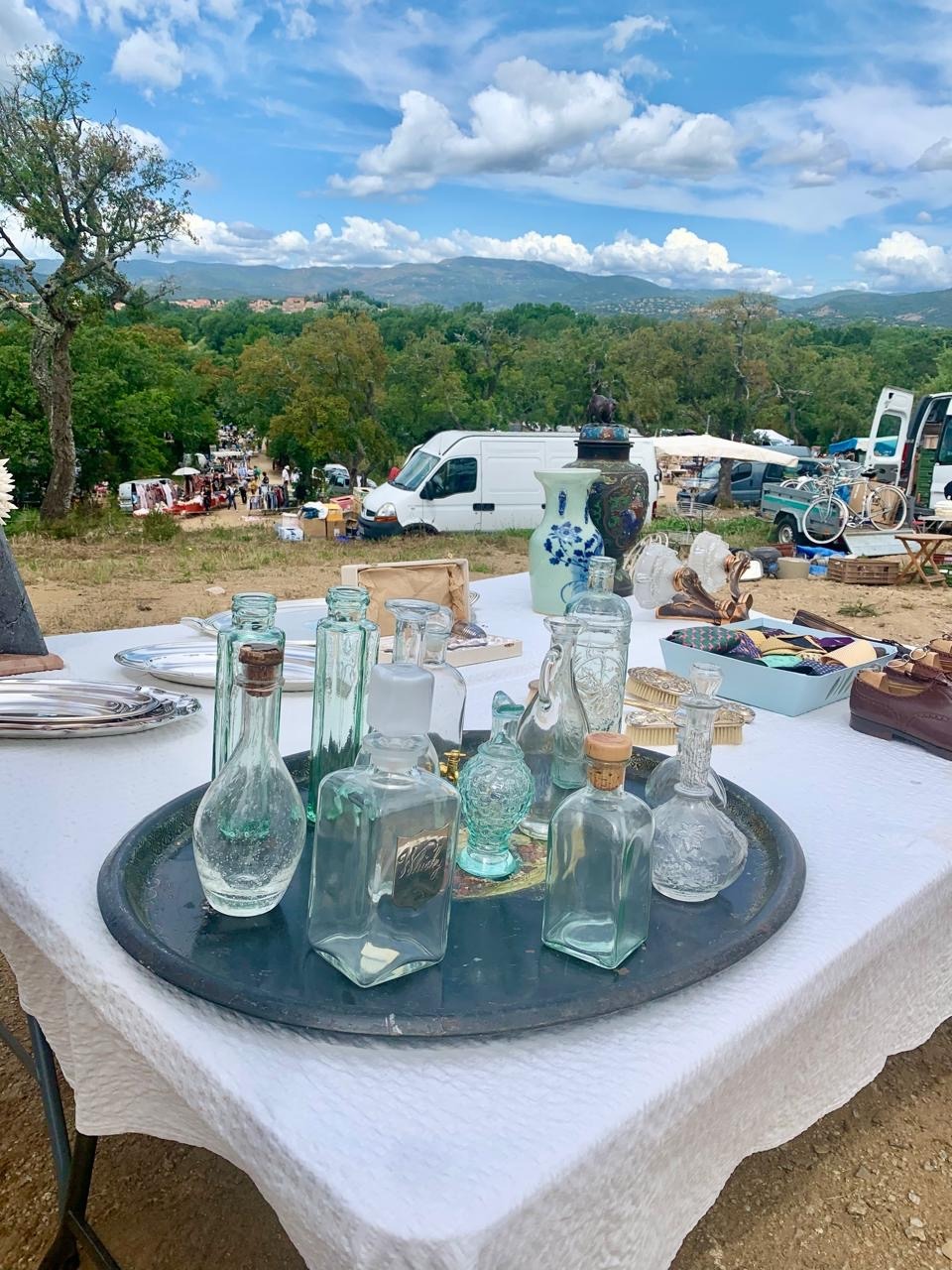
Brocante Jas Des Robert, Cogolin
There’s a mix of professional second-hand dealers and private sellers. You can find almost anything from mid-century furniture to Provencal paintings, vinyl records, jewellery, handbags, designer clothes and ceramics in all shapes & sizes. There is always a great atmosphere,
especially when the sun is shining. The al-fresco café serves small snacks and there’s often live music. Ideal for bargain hunters, antiques lovers and enthusiasts. We love this place and frequent it as customers as well as vendors.
13. Hike up to Les Roches Blanches above the village of La Garde Freinet
The authentic village of La Garde Freinet, which is situated in the midst of the Massif des Maures, has 9 different trails departing from in and around the village. A real hikers’ paradise. The highest point is Les Roches Blanches, a sparkling quartz vein, affording a dazzling 360° viewpoint (637m).
You’ll see the Gulf of Saint Tropez, the Plaines des Maures, the Lac des Escarcets, the rock of Roquebrune and the Pre- Alps as well a good slice of the Mediterranean. Next to the quartz there are also mica-schists and garnet crystals so it’s a wonderful place of geological interest. It’s
hike number 5 on the map of provided by the tourist office. You park your car at the free La Croix car park and follow the trail through the Massif des Maures. At first, it’s just an easy flat path but once you take a left turn the ascent through the wilderness starts. Good boots are essential. There are several different options on this trail, some are more challenging. We will write a separate more detailed blog on all of the La Garde Freinet hikes. The route is between 5.8 to 8km depending on which option you choose. Afterwards soak up the sun at Bar du Soleil and immerse yourself in the hustle and bustle of the village.
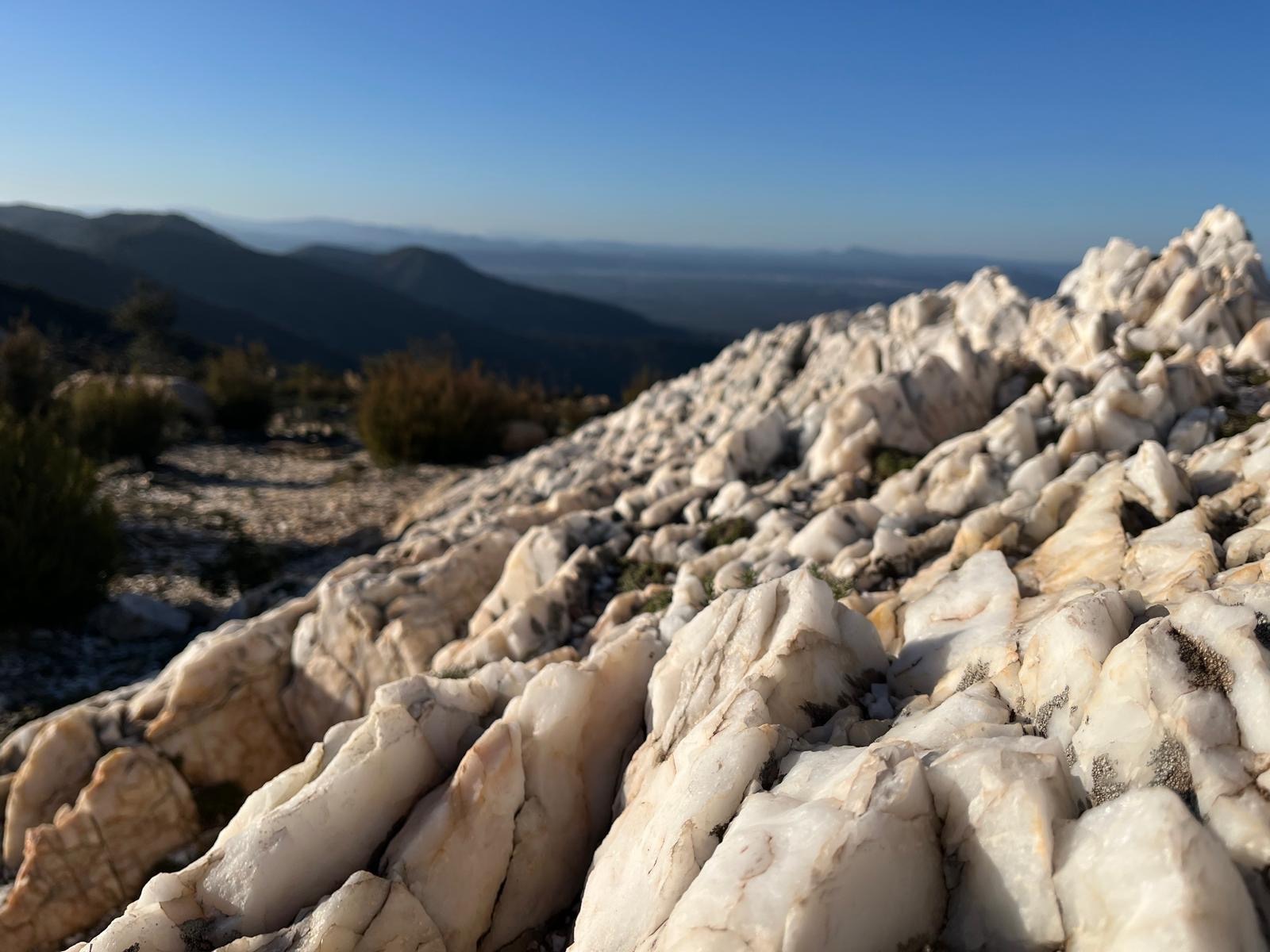
Les Roches Blanches, La Garde Freinet
14. Enjoy Christmas in the Gulf of Saint Tropez
Tropez which features a new theme every year including a light show at the port. There’s a lovely Christmas market alongside an ice rink or Patinoire on Places des Lices, a much-loved feature with all kids and teenagers in the area. On Christmas Eve, Santa arrives by boat together with his elves and in the port there is a carriage waiting for him with horses dressed as Reindeer!! There are usually fireworks at the end and the atmosphere is wonderfully festive. Cogolin, Grimaud and La Croix Valmer are also very active during the Christmas season. There is a beautiful event, La Fete des Lumières, held in mid- December which celebrates the start of the Christmas lights in the Place Vieille including a lantern walk with a Jazz band. There’s vin chaud, biscuits and chestnuts. Grimaud also hosts an organic and zero waste Christmas market every year. There’s a beautiful Christmas nativity scene created by Maxime Codou in La Garde Freinet. There are also many other events such as concerts and parades happening within the communes around the Gulf of Saint Tropez. Most of these events are free. We’ll put together a special Christmas Events calendar so you don’t miss anything.
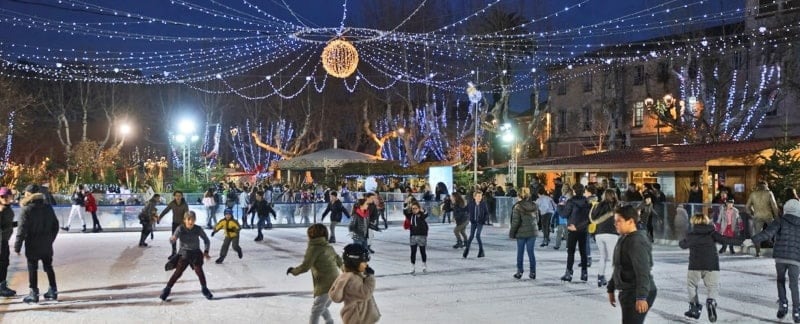
Christmas at Places Des Lices, Saint Tropez
15. Walk & have lunch at Pampelonne Beach - L’Orangerie, Tono or Le Migon, Ramatuelle
Pampelonne beach is one of the most famous in the world and a popular hangout during July and August. There are numerous beach clubs and the sea is dotted with yachts and sailboats. As locals we love Pampelonne beach during the off-season. The entire beach is stunning and ideal
for long walks and jogs as it is 4.5km long. As cold-water swimmers (mentioned in point 1) we love combining the walk with a swim at the end. The water is crystal clear and often calm (especially in the mornings) as it is located in a sheltered bay. There are a number of establishments open all year so we really enjoy going there during the off-season:
L’Orangerie – located at the northern end of Pampelonne. This beautiful beach club is one of the original ones and has been around for over 50 years. It’s very stylish but friendly and relaxed with a great seafood & Mediterranean menu. They also serve breakfast and are open 7 days per week all year round.
Le Migon – located on the most southern spot on Pampelonne, beneath the Camarat lighthouse in an exceptional, wild setting this is one of the last preserved original Beach Restaurants. It embodies the soul of Pampelonne beach like no other. It’s still family owned and has a unpretentious rustic Italian, Mediterranean and Provençal menu. During the colder months they light a cosy fire inside the restaurant. Open all year. Make sure to book in advance.
Tono – located on the northern end of Pampelonne, right next to L’Orangerie. We love this place. A bar with a simple but truly delicious menu, Tono serves kebabs, burgers and other snacks. Try the Truffle fries! The prices are honest and it’s a great place to visit with kids. They often have DJ’s and the atmosphere is always relaxedand friendly.
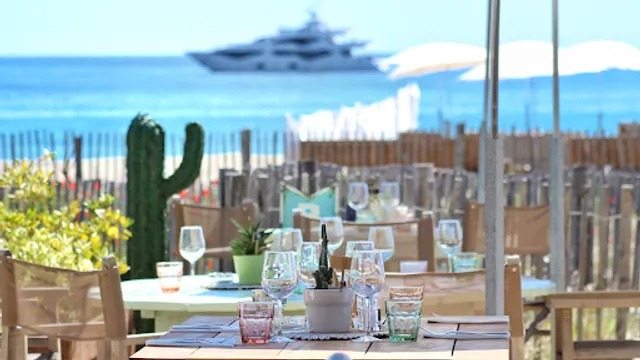
L’Orangerie, Plage de Pampelonne, Ramatuelle
16. Stroll through Medieval Grimaud – Église Saint-Michel, Rue de Templier and the Chateau
visiting, over and over again! Wander through the charming village centre with its historic buildings, pastel shutters, cobbled streets, small alleyways, bougainvillea and palm trees. Make your way up to the Chateau and enjoy the splendid view. Stroll through the Rue des Templiers, (which used to be the main street) and have a quiet moment in the Église Saint Michel, a wonderful 11th century church that embodies early medieval Provençal heritage like no other. Many artisans have their home here in tiny shops but they may not all be open during the winter. There’s also an original Moulin (windmill) behind the village with great views (in case you can’t make it up to the Chateau) and this area is also the starting point for several nice walks. There are also many restaurants and cafes in the village but most are closed during the winter. Le Clems is usually open and serves decent food.
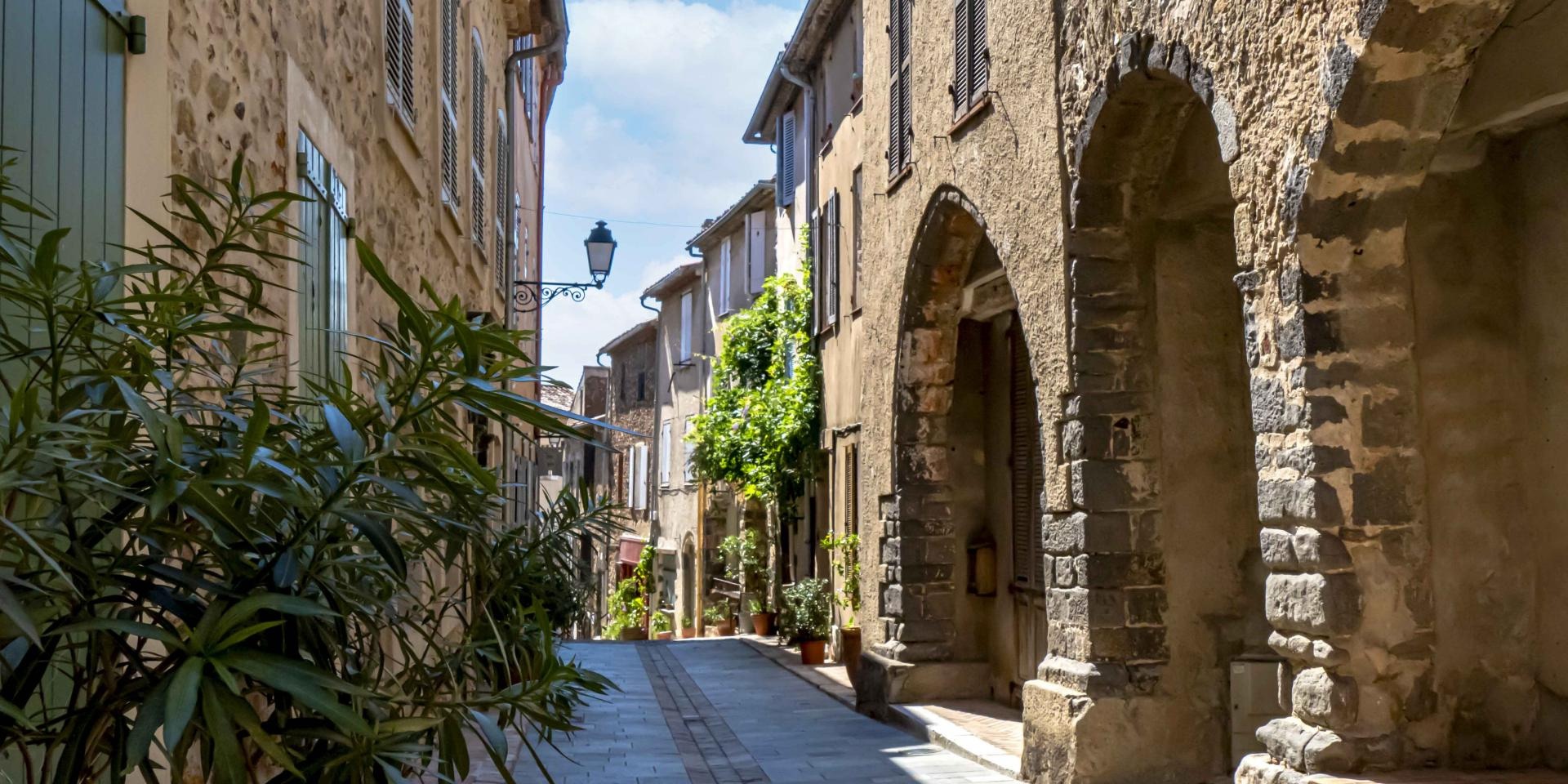
Rue de Templier, Grimaud Village
17. Shop at the Provençal Saturday (or Tuesday) Market, Saint Tropez
including breads, pastries, biscuits, nougat, artisan sweets, candied fruit, cheese, sausages, olives, tapenade and other spreads, spices, herbs and amazing Arabic food. Try the slow cooked vegetable wrap and sip mint tea while your food is being prepared – delicious and affordable for only 4 euros. There is of course fresh local produce, as well as various bric-à-brac+ stalls, jewellery, souvenirs, household goods, gifts, soaps, paintings and other art, straw bags, shoes, flowery dresses, knitwear and so much more. Every visit is a delight!
Café Des Arts, Saint Tropez
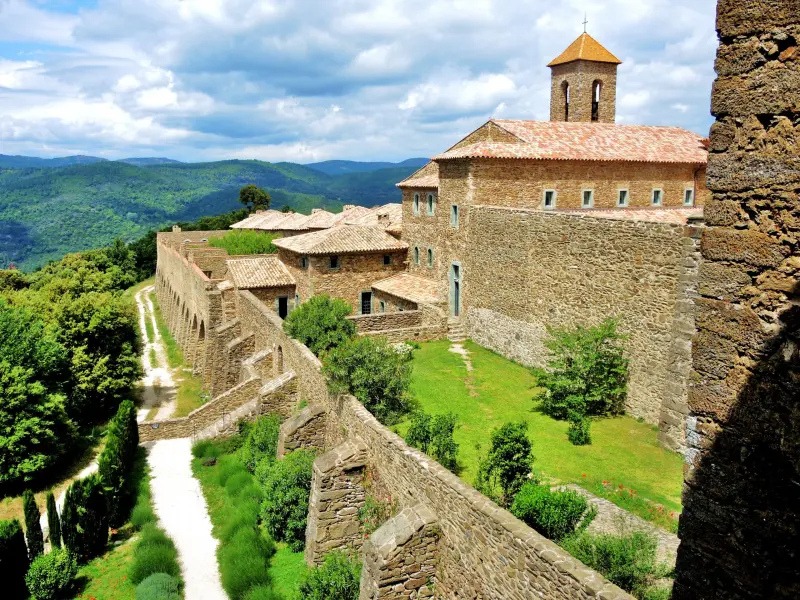
18. Visit Chartreuse de la Verne, Collobrieres
Bishop of Toulon and Frédol d’Anduse, Bishop of Fréjus. Successive fires in the 13th, 14th and 16th centuries ravaged it and destroyed all the buildings. It was rebuilt each time. The last reconstruction was long and had barely been completed when the Revolution broke out, leading to the equestration of all the property. In 1792, after the flight of the last Carthusians, the land, buildings and all the furniture (objects of worship, paintings, library, etc.) were sold as “national property”. From then on, a period of slow decline took place and eventually in 1921 the Chartreuse was classified as a Historic Monument but basically in ruins as “remains in the forest”. It was only thanks to two extremely determined Ladies, Madam Annette Englebert and her friend Madam Annick Lemoine, who founded the association “Les amis de la Verne” that the building was saved and slowly and lovingly restored. In 1982 the monks and in 1986 the nuns of the monastic family of Bethlehem moved in and live there to this day.
The Monastery is open all year round but closes on different religious holidays so please check before you start your journey. There is no catering (so bring a picnic) but a beautiful craft shop where you can purchase handmade religious objects, books and local foods and products. If you’re lucky you’ll hear the choir sing. Simply beautiful. Rumour has it that the church was built on a pagan temple dedicated to the goddess Laverna, protector of thieves to whom the thick forest of the Maures
offered a safe haven.
19. Cycle around the coast from Sainte Maxime and hop on the ferry back from Saint Tropez
the coast. Numerous bike rental outlets stayopen all year round as does the ferry operator to bring you back. Stop off at Port Grimaud along the way and take a break after your ride to enjoy some of the many attractions the village of Saint Tropez has to offer off-season before jumping on the ferry with your bike to come back to Sainte Maxime.
20. Hike up to the Cross and Fort in La Garde Freinet
experienced. In rainy or windy weather don’t attempt this hike. (Please also read point 13) The climb to the cross, which towers over the village, is relatively easy. From the cross you have amazing views over the village, the Gulf of Saint Tropez, the Mountains of the Maures, the Pre-Alps as well as the Mediterranean. From here you follow the sign for Le Fort Freinet and you’ll quickly see that the path gets more difficult (hike no1 on the map). The Fort-Freinet is an archaeological site, a former fortified medieval village from the 12th century located just above the modern-day village. Whilst there’s not all that much left of the old fortification it’s still very interesting and the views are amazing. There’s also an old moat that’s usually filled with water and very picturesque. When our kids were small, we used to encourage them to use their imagination and think about how people lived up until the 16th century in this rock cut settlement with houses, a chapel and connecting steps (we